Thermal Desorption Description
HydroPure Technologies LLC utilizes Indirect Thermal Desorption technology to treat oil and water-based drill cuttings and contaminated soils in Azerbaijan. The term “Thermal Desorption” means to separate liquid components in a sludge or cuttings mixture by use of high temperatures to evaporate the liquids out of the material. Thermal Desorption has several variations, but HydroPure utilizes Indirect Thermal Desorption which means the heat source flame does not come into contact with the cuttings or sludges. The HydroPure Indirect Thermal Desorption System utilizes stand-alone thermal fluid heaters to heat thermal oil that circulates through the heating surfaces which contact the cuttings inside the dryer.
Indirect Thermal desorption is a proven treatment technology that effectively removes organic compounds from cuttings and several other contaminated waste streams from soil and sludge. Thermal desorption occurs when organic contaminants (oil) and water adsorbed into soil particles or cuttings are exposed to temperatures above their respective boiling points. This heat is sufficient to cause a phase change in the liquids, thereby causing the liquids to evaporate or “desorb” from the solid material. Due to the low heating value of soil or sludge, incineration of the soil does not occur. In addition, the temperature in the process stays below the cracking temperature of the oil in the cuttings, so the oil is not damaged and can be recycled.
There are several types of Indirect Thermal Desorption technologies available. HydroPure utilizes a Paddle Dryer Processor that has been highly effective in treating drill cuttings.
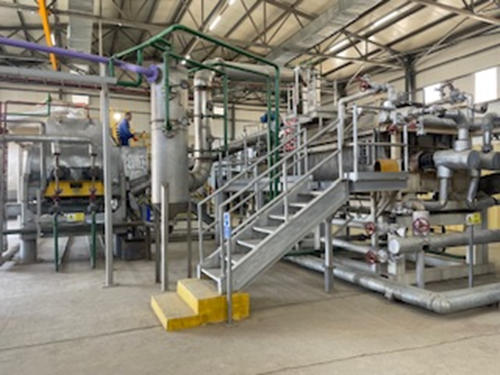
HydroPure OBM Cuttings Treatment System Process Principals
HydroPure has developed its OBM Cuttings Treatment Systems based on its decades of experience in dealing with all types of oily wastes and contaminated soils. There are several types of Thermal Desorption Technologies available that have been utilized by HydroPure in the past, but HydroPure has developed its own process that is based on the following principles.
The most important factor in processing large amounts of cuttings (> 6 tons per hour) is utilizing an adequate amount of heating surface area to contact the cuttings. HydroPure utilizes dryer technology that offers the maximum surface area. Based on HydroPure’s experience, it takes 200 square meters of surface area for five tons per hour process rate. By utilizing large surface area in the dryers, the cuttings are gradually heated up to the target temperature without damaging the quality of the recovered diesel or synthetic oil.
-
Cuttings treatment is best accomplished in a two-step process. The first step is to remove only the water from the cuttings. The lower temperature allows the water to gradually heat up to boiling temperature, thereby preventing flash drying. Flash drying involves using an extremely high temperature to immediately heat the material. When dealing with cuttings, flash drying causes the cuttings to stick to the heating surfaces and dry into a hard, concrete like consistency. The hardened cuttings that are stuck to the paddles insulates the heating surfaces and prevents efficient heat transfer. The hardened cuttings also cause wear and abrasion on the paddle surfaces and shafts.
With most of the water removed from the cuttings, the material is transferred to the second, high temperature step. The dewatered cuttings do not stick to the 340℃ paddles in the second dryer. After entering the second dryer, the cuttings break down to dry, granular material that efficiently contacts the paddles for maximum heat transfer.
Metal Erosion Minimization. The principles of HydroPure have over 30 years of building centrifuges and other oil waste processing equipment and are experts of controlling metal erosion from abrasive materials. The paddle drying systems provided by HydroPure are fitted with replaceable wear protection inserts and coatings. The units are emptied, cleaned, and inspected every three months. Any protective pieces or inserts that show signs of wear are repaired or replaced. This practice prevents the core rotating shafts and paddles from ever being damaged from abrasion, thereby allowing the units to operate indefinitely without major repair or replacement.
.
HydroPure Paddle Dryer Processor System Description
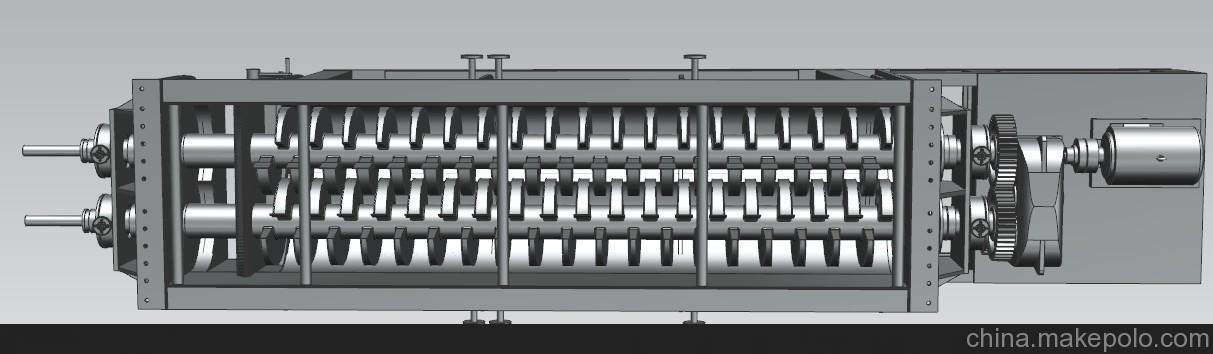
The HydroPure Paddle Dryer Processor is a highly efficient, mechanically agitated, indirect transfer device for adding heat to a process mass. Dual counter-rotating shafts with unique intermeshing wedge-shaped paddles produce intimate mixing, uniform heat transfer, a high heat transfer rate, and a self-cleaning effect. A metal wall separates the process mass from the heat transfer medium. High thermal efficiency is obtained because the heat transfer is by conduction, or direct contact with the cuttings. Very little heat is lost in the process due to its insulation.
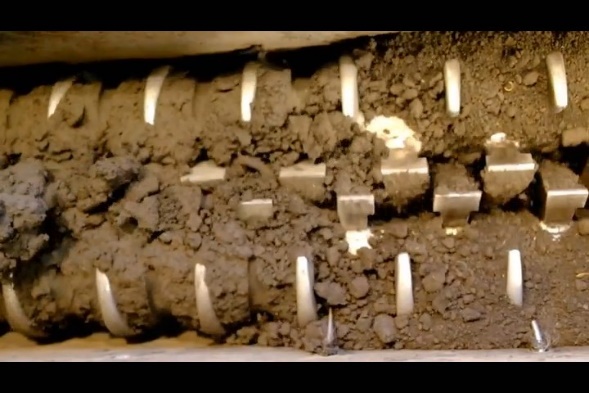
The HydroPure Paddle Dryer transfers material, regardless of its handling characteristics. Sticky, pasty materials can easily be transported through the system. Material is conveyed through the Paddle Dryers by displacement (“piston flow”). As material is added to the feed end, it is assimilated into the bed by the mixing action of the agitators. Hydraulic head pressure, combined with the action of the wedge-shaped paddles, pushes material around the paddles. Since the product moves by displacement, residence time is controlled by the feed rate and the overflow weir height.
The HydroPure Paddle Dryer is designed with high torque capabilities to increase its process flexibility. Because the Paddle Dryers are indirectly heated, the amount of off gas is minimized, with the risk of fires being minimized with nitrogen purging and steam snuffing.
HydroPure will utilize two types of Vacuum Paddle Dryers:
- Low Temperature Paddle Dryer Dehydrator (Can be Steam or Thermal Fluid Heated)
- High Temperature Thermal Fluid Paddle Dryer for oil removal
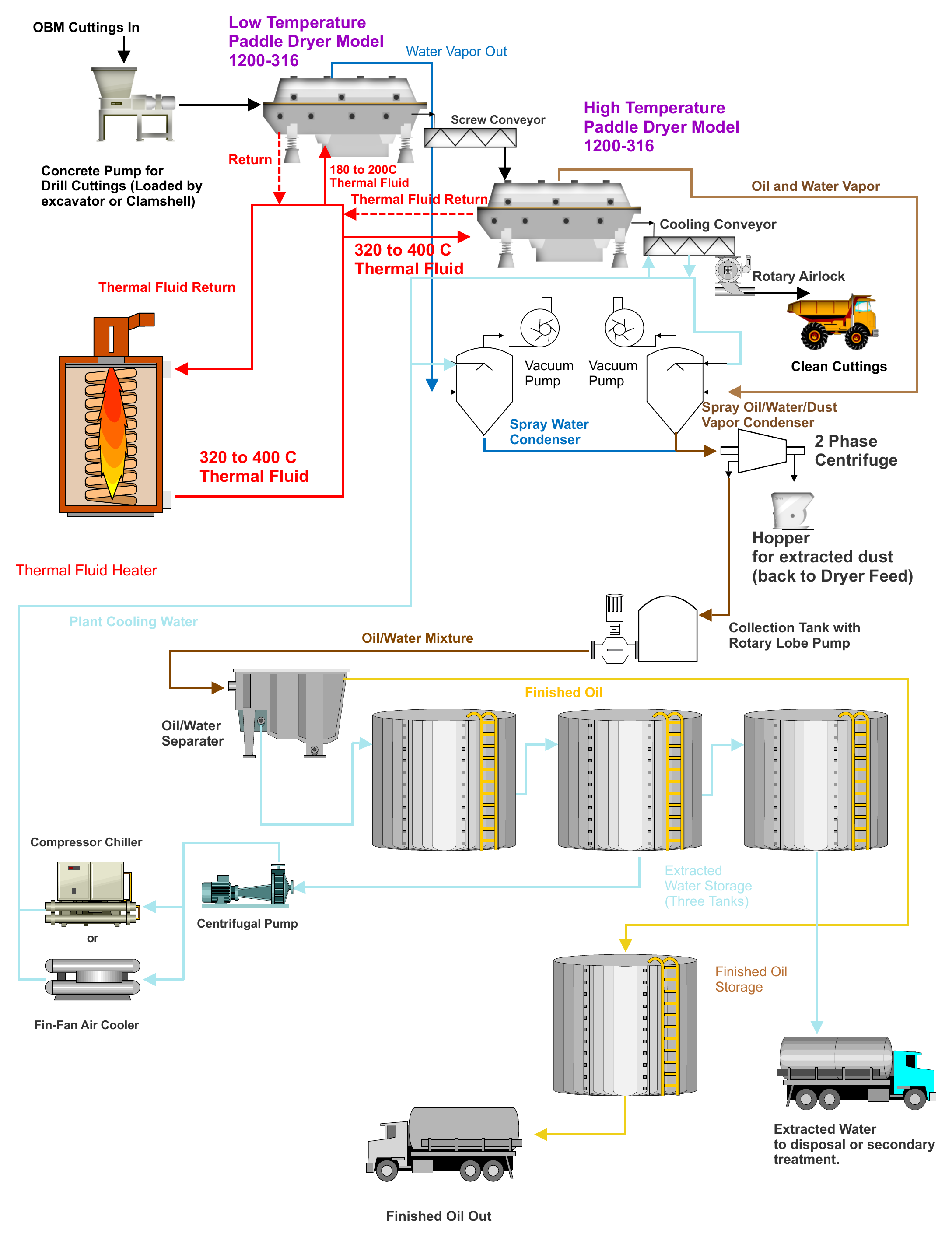
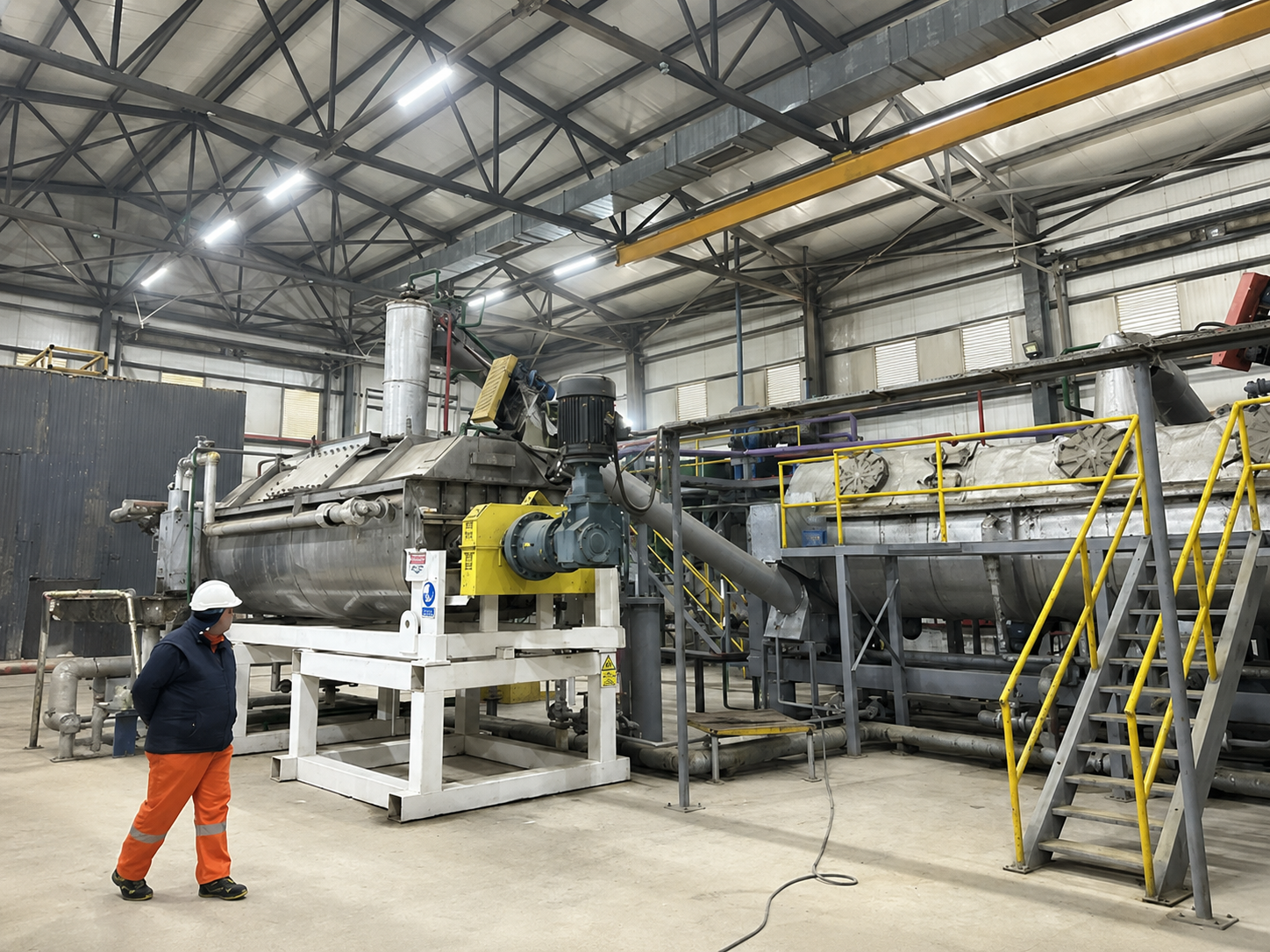
Step One – Low Temperature Paddle Dryer/Dehydrator - The first processor is a Low Temperature Paddle Dryer System that will is used to evaporate most of the water from the cuttings. This system is a dual-rotor, hollow paddle dryer that is designed to efficiently agitate, pulverize, and dry materials that are viscous, sticky, and abrasive. These types of dryers are commonly used to dehydrate sludges, animal byproducts, and other types of difficult materials.
The Paddle Dryer has twin rotor shafts that have round wedges that mesh when rotating. The shafts and wedges are pressurized by 10 to 12 bar steam for heating if steam is the heat source. If steam is not available, Lower Temperature Thermal Fluid (<200℃) can be used. Dual counter-rotating shafts with intermeshing wedge-shaped paddles result in a high material mixing rate and a self-cleaning effect which optimizes the heat transfer rate. This is due to the shearing forces developed over the slanted surfaces of the revolving wedge-shaped paddles as they move through the process material. The wedge-shaped paddles, and their intermeshing action, create a localized circulation of individual particles and material, enhancing exposure to the heat transfer surfaces.

This constant mixing also produces the self-cleaning effect and maintains the high heat transfer rate even when processing sticky material or material that goes through a sticky phase when being heated or dried. The counter-rotating shafts move process material away from the walls of the trough by means of the tab on the trailing edge of each paddle
The constant agitation of the cuttings with 180-degree C wedges efficiently heats, pulverizes and evaporates all the water in the cuttings. Self-cleaning capabilities are critical in processing drill cuttings due to the sticking of bitumen to the heating surfaces.
A 20% to 50% vacuum is maintained on the Paddle Dryer to reduce the evaporation temperature of the water in the cuttings. The vacuum is maintained by feeding and discharging the cuttings through rotary airlock feeders.
Step 2 – High Temperature Thermal Fluid Paddle Dryer – After the water has been removed in the Low Temperature Dryer system, the cuttings will be in a semi-dry granular state that will contain approximately 10% base oil. The purpose of the High Temperature Thermal Fluid Paddle Dryer is to remove all the base oil from the cuttings and recover the oil without damaging its performance properties.
The High Temperature dryers are identical to the Low Temperature Paddle Dryer, except the condensing of the oil vapors uses different equipment. The heating surfaces are engineered for high-flow thermal fluid heating with even heating throughout the dryer. Since the heating surfaces are heated by thermal fluid that is below the thermal cracking temperature of the synthetic base oil, there is no chance of thermal cracking of the synthetic base oil. Other thermal desorption techniques, particularly the externally heated rotary drum systems, the heating surfaces are externally heated by flame. This leads to much higher heating surface temperatures which can cause thermal cracking of the base oil.
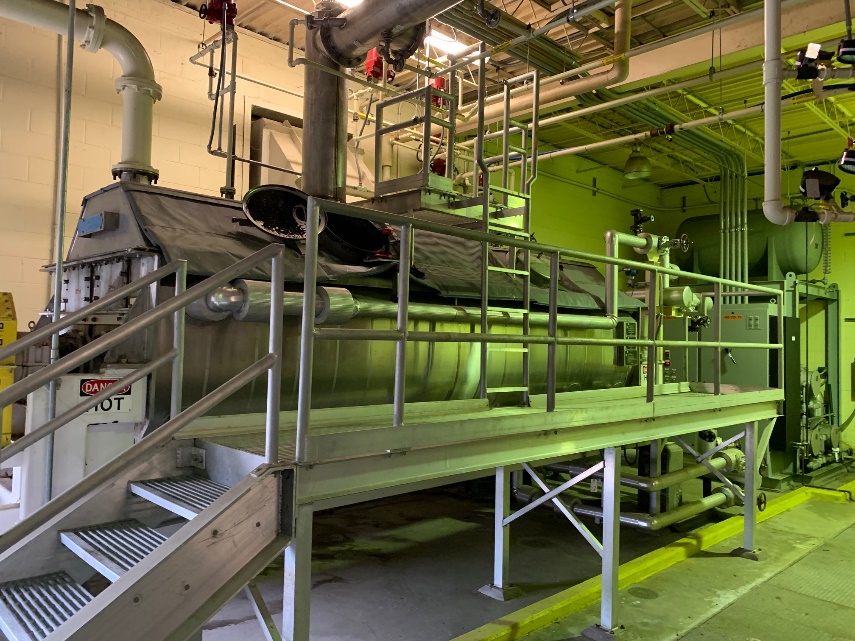
Drill Cutting Treatment Plant Outputs
The Drill Cutting Treatment System will provide the following outputs at 5 tons per hour process rate:
| Solid Phase | < 1% moisture by weight <0.5% oil content by weight |
|---|---|
| Water Phase | <1% solids by volume <1% oil by volume |
| Oil Phase | <1% solids by volume <1% water by volume |